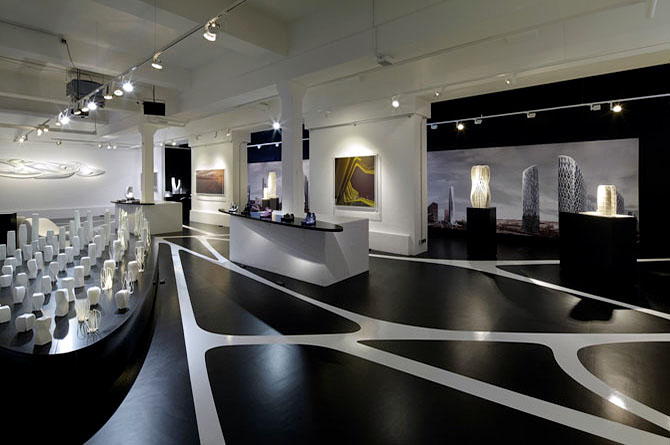
Despite the excitement surrounding her ideas, many developers initially hesitated to build her projects.
Clients often considered her designs too radical or technically challenging. For nearly a decade, Hadid’s work
remained largely theoretical, appearing mainly in exhibitions and architectural publications rather than on
construction sites.
Her breakthrough came in the early 1990s with the construction of the Vitra Fire Station. This building marked
the first realization of her architectural vision and quickly became an iconic example of experimental design.
The project demonstrated that her bold forms could successfully move from paper to reality.
The architectural world soon became more receptive to innovative design approaches. The international success
of the Guggenheim Museum Bilbao, designed by Frank Gehry, helped shift public perception toward more
expressive and sculptural architecture. In this new cultural climate, Hadid’s ideas gained widespread
acceptance and demand for her work increased dramatically.
During the following years, Hadid completed many major projects that established her reputation as one of the
leading architects of her generation. Among the most notable works are the Rosenthal Center for Contemporary
Art, a striking urban museum known for its dramatic interior spaces; the Hoenheim-Nord Tram Station and Park
and Ride, which integrates transportation infrastructure with bold architectural design; the extension of the
Ordrupgaard Museum; the futuristic Phaeno Science Center; and the innovative BMW Central Building. Another
landmark project is the MAXXI – National Museum of 21st Century Arts, a museum complex famous for its flowing
interior galleries and interconnected spaces.
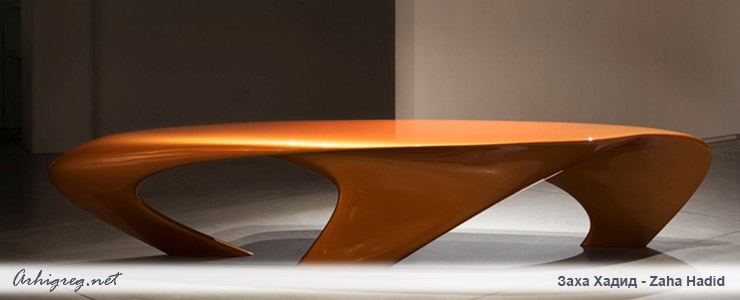
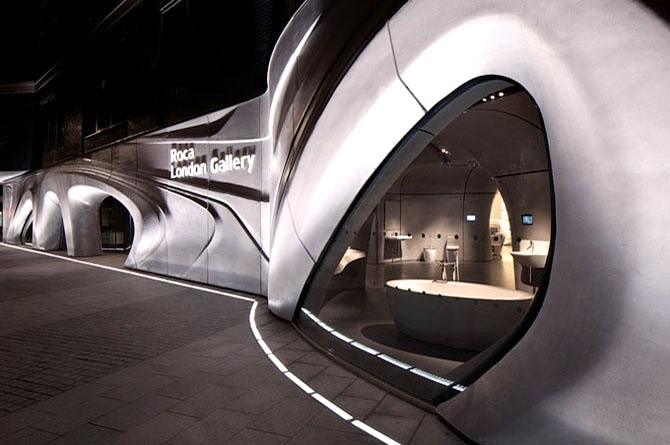
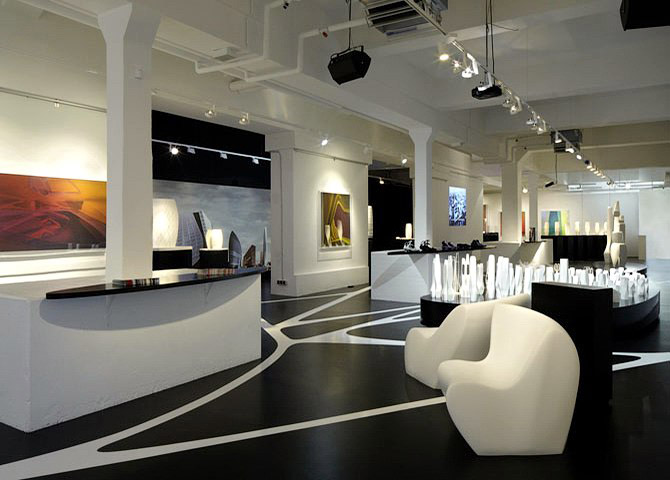
Beyond architecture, Hadid explored many areas of design. She created futuristic furniture collections,
experimental lighting designs, and even collaborated on fashion and footwear projects. Her creative approach
blurred the boundaries between architecture, industrial design, and art, demonstrating how a unified design
philosophy could influence multiple disciplines.
Hadid was also a passionate educator. She frequently delivered lectures and masterclasses at universities and
international conferences, inspiring young architects with her vision of architecture as a constantly evolving
art form. Her presentations were known for attracting large audiences eager to learn about her design
philosophy and creative process.
Over time, Zaha Hadid Architects grew into a large and highly respected international practice. The studio
brought together architects, designers, engineers, researchers, and specialists from many countries, forming a
multidisciplinary team capable of handling complex projects around the world.
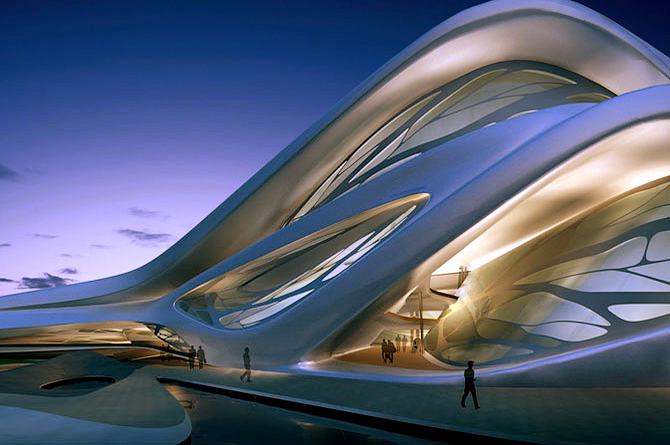
Today, Zaha Hadid’s legacy continues to influence contemporary architecture. Her buildings challenge
conventional geometry, embrace movement and fluidity, and reflect the possibilities created by modern
technologies and digital design. As one of the most famous female architects in history, she opened doors for
future generations and reshaped the global architectural landscape with her visionary ideas.